Showing posts with label Government. Show all posts

Wednesday, 5 November 2008

Obama 338 - 163 McCain


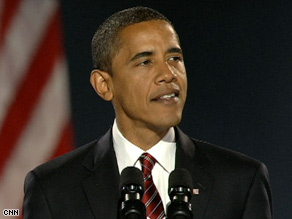
As you can see from the result above, the Illinois Senator Barack Obama was elected to be the next President of the United States. He will start that job on January 20th, 2009.

Results breakdown
Here is a graphical representation of who won each state:

Here is a simple breakdown of the numbers
ChoiceNo. states
Democrat28
GOP21
Incomplete2

The result above is about electoral college votes and that's what decided who won the states. Remember that the votes of the people don't count in the US, although it's expected that the members of the Electoral College assigned to each state will vote the way the people do. It hasn't always happened like that though (have a look at the results from the 2000 Gore vs. Bush election).

Big switch
One of the most interesting facts from this result is that nine states switched there support and in all cases it was from GOP (the Republicans) to Democrat. Those states included Florida, an important state in 2000 and has been Republican for a number of years. It was an area that Rudy Giuliani concentrated on heavily when he was campaigning.

What reasons could there be for the big switch in those nine states? Well, there are several possibilities. A campaign theme for McCain was based around fear (because of the terrorist attacks). Maybe Obama's message of hope was more appealing. The VP picks have been frequently analysed and maybe the gaffes of Sarah Palin were a factor.

Exit poll analysis
The exit polls on CNN reveal some interesting information about the way people voted. Some of it is stating the obvoius, but it's better when it's confirmed with numerical data.

It seems a large proportion of John McCain's votes came from the older white population. Obama dominated the young and non-white demographics. As an example, 55% of the white population voted for McCain and a spectacular 94% of African-Americans went for Obama. Another example is that McCain got 53% of the 65 and older demographic.

This goes to confirm that age and race still play a major part in the election. It's worrying, but not unexpected.

Speeches
The following is Barack Obama's victory speech:


This is the sort of speech that Obama has been giving throughout the camapign. Although it is full of inspirational talk and essentially a message of hope and change, it doesn't give us anything new.

Lack of detail in speech
He doesn't go into specifics about all his policies either. A criticism of him has been that he hasn't done that thorughout his campaign. However, I believe he has - for example, he has a plan for improving national security freely available on his website and it contains budget figures, military numbers and deadlines. Also, he can give us more detail when he actually gets into the Whitehouse because then he'll have access to more information.

GOP defeat
John McCain was gracious in defeat, saying that he now hopes that America can move forward:
"This is an historic election, and I recognize the special significance it has for African-Americans and the special pride that must be theirs tonight"
"These are difficult times for our country. And I pledge to him tonight to do all in my power to help him lead us through the many challenges we face."
International recognition
There were many leaders who congratulated Obama on his victory - but then that's to be expected. They want to have good relationships with one of the most powerful nations on earth. It's something that's been done over many years. Here is what Gordon Brown had to say:
"I hope to be able to work with Senator Obama to bring the world together so that we can face these difficult times with more coordination and more unity than we've seen before."
Problems
It seemed to be a relatively smooth election day. The only problems that were reported mainly focused on long queues and faulty e-voting systems. The queues are unavoidable, but they could be minimised if more polling stations and voting booths were made available. It's a simple formula. The availability of voting machines cannot be based on the turnout of a previous election because it doesn't take into account the candidates and the current public feeling towards politics and other current affairs.

E-voting was something heavily criticised in previous elections and it is something that I've blogged about before, but providing more research and development is done, it can work.

Summary and conclusion
It has been a very long election process. Most people will agree that it has been too long. There needs to be some reform in this area soon. The scheduling of primaries needs to be worked on too - entire states were robbed of the delegates that would normally go to the party conventions where the presidential candidates are announced.

It has also been heavily money-driven. There were several stories in the media about campaign funding. Several people support the idea of a funding cap. It's something I agree with because if everyone has the same amount of money, it shifts the focus from finances and onto the important politics.

Despite all that, I believe a high calibre candidate has been elected as President and hopefully his promise of change will be reality during his tenure (whether it's four or eight years).

So, what do you think?

Technorati tags: Politics, US Election, John McCain, Barack Obama, Government,

Wednesday, 7 May 2008

The '08 primaries - not many left

On May 6th we had the primaries for Indiana and North Carolina. These states were incredibly important for Hillary as it was a chance to build up more late momentum (after her win in Pennsylvania). For Barack Obama, they were a chance to get an even bigger lead in the delegate count prior to the Democratic National Convention in June. As for John McCain, he was able to do more profiling and preparation for the general election portion of the election season.

Here are the Democrat results for the primaries that took place on May 6th:

North Carolina
Candidate Vote %age Delegates
Barack Obama 56 58
Hillary Clinton 42 42
Indiana
Candidate Vote %ageDelegates
Hillary Clinton 51 37
Barack Obama 49 33
If you just look at who won, you would think it's 1-1. However, it's a bit more complicated than that. Obama won North Carolina by a significant margin (in terms of votes and delegates) and only narrowly missed out on a win in Indiana (2% behind Clinton in votes and a difference of four between the two delegate counts). In reality, this was a good night for Obama because he takes 91 delegates and Clinton only takes 79.

Naturally, Hillary tried to put a positive spin on the results by saying:
"Not too long ago, my opponent made a prediction. He said I would probably win Pennsylvania, he would win North Carolina, and Indiana would be the tiebreaker.

Well, tonight we've come from behind, we've broken the tie, and, thanks to you, it's full speed onto the White House."
This is a clever thing to say because the voters who aren't necessarily interested in the finer details may think she's still got a really strong chance of winning and then go and vote for her. The truth is that she has a chance, but it's far from strong.

This is what Obama had to say:
"You know, there are those who were saying that North Carolina would be a game changer in this election. But today what North Carolina decided is that the only game that needs changing is the one in Washington, D.C.

I want to start by congratulating Senator Clinton on what appears to be her victory in the great state of Indiana."
This was also a clever things to say. He is getting the people of North Carolina on his side and also pandering to the Hillary Clinton supporters. This will become increasingly important if he wins the nomination because he'll need all the votes he can get when he goes against McCain, who's had solid GOP backing for a while.

So, how can Hillary win? Well, according to the CNN Election Center, Obama has 1,836 delegates and superdelegates. Clinton has 1,681 (which means there is a difference of 155). In the remaining primaries, there are 217 delegates available. This is one of the reasons why I said Clinton didn't have a strong chance earlier. She would have to win nearly all the remaining primaries by significant margins.

Of course, it would be easier for her if some of the undecided superdelegates pledged their allegiance to her (270 available), but they might just go with the popular vote if they haven't made their minds up yet.

Michael Tomasky has an interesting point in this article. Even though he believes Obama has the advantage, he thinks that Obama has had multiple opportunities to "close the deal" and hasn't done that so far. He wonders if that is an indicator of what may happen.

Obama, like any candidate, can theoretically have a runaway victory providing there's enough positive publicity and decent early results. Obama certainly had that (e.g. Iowa). However, John McCain has proved that you can come from behind and finish strongly. Tomasky cites New Hampshire, California, Texas or Ohio and Pennsylvania as points where he could have won. I agree with Pennsylvania because of the significant number of delegates, but the others aren't good choices as they are too early on in the process (especially new Hampshire - that was the second primary/caucus).

This article states that some of Clinton's aides are now saying it's nearly impossible. That is something very important. If the people in your campaign team are losing faith in your chances, what hope do you have?

It gets even worse for Clinton because Obama seems to have survived the problematic issue of Jeremiah Wright - his former pastor. That could have (quite easily) turned into a public relations nightmare, but it hasn't.

So, what do you think?

Technorati tags: USA, Elections, Politics, Barack Obama, Hillary Clinton,

Wednesday, 23 April 2008

Pennsylvania Wars: Clinton Strikes Back


Photo taken by Barbara Kinney

Before the voting day in Pennsylvania, many people felt that Obama would lose in that state. He was behind in the polls and the citizens are people who fall into the categories that typically vote for Clinton. However, I'm always skeptical about polls - especially after the surprise in Iowa earlier on this year.

Anyway, as the results show, the polls were correct:
CandidateVote %ageDelegates
Hillary Clinton5552
Barack Obama4546
This is undoubtedly a good result for her as it's a big state with plenty of delegates and it will give her a certain amount of momentum. However, it's not as big a margin as everyone thinks.

It seems that even after all this time, the media still doesn't undertand how the election process works in the US. They are all reporting the "big" 10% gap and forgetting that the vote percentage counts for absolutely nothing. The important statistic is the relatively small difference between the two in terms of delegates (six). That doesn't prove there's a huge swing towards Hillary (which is why I said 'a certain amount of momentum').

This is what Hillary had to say after the results were announced:
"You know, some people counted me out and said to drop out. But the American people don't quit, and they deserve a president who doesn't quit, either"
It's true - she hasn't quit. It would have been easy to do that earlier on because Obama continually won primaries and got to the point where he went past her delegate count. However, she realises that there is still time to overtake him because there are 9 Democrat primaries/caucuses and numerous delegates left before the the party's convention.

As a side note, it seems that Mike Gravel dropped out a few weeks ago. It shows how effective his campaign was when the media barely report it. I was thinking that he decided to remain in the race because he wanted to do some profiling before a run as an independent. However, due to the lack of media coverage I doubt that many people will know about him when the general election starts.

So, what about John McCain? I haven't heard much from this guy lately. It's possible that he could be pleased that the Democrat race is still going on. It means that there is still indecisiveness among the party and that could give him an advantage. It also means he has a bit more time to prepare his general election campaign. However, the continuing Democrat contest gives more media coverage to that party. It means that the voting population know more about the candidates and what they stand for. To stop this from being a problem, I think McCain needs to start doing a lot more.

According to the polls, the presumptive GOP nominee is way behind Obama and Clinton. As an example, here are the fundraising totals for March:
CandidateMoney ($)
Barack Obama40m
Hillary Clinton20m
John McCain15m
It's amazing that Obama is able to raise twice as much as Hillary and 25m more than McCain in just one month. It'll give him a great advantage interms of creating publicity if he becomes his party's candidate.

It's interesting that, despite all that Obama momentum and the total dominance of McCain on the Republican side, there are still some sections of the media that have a bias towards Clinton. Take this article in the Telegraph as an example. All it mentions is Hillary. It's almost as if nobody else was running. I wonder if this is still the case on some of the US media networks aswell.

Another thing that hasn't changed is the ability of each candidate to use tired clichés. On Monday's episode of WWE RAW, each candidate made a short speech about why they should be the President. Each speech contained a healthy dose of clichés that were (presumably) included so that they would appear to be in touch with the people that they are talking to. There were classics such as "the election is like the King of the Ring" and "Can you smell what Barack is cookin'?". Oh dear. I'm sorry, but if they wanted to appear 'in touch', they should have avoided those and respected the intelligence of the fans by just talking about policies.

Anyway, the race to the Whitehouse carries on and the conventions to decide the candidates are getting closer (I say that because McCain is only presumptive and, technically, the delegates still have to cast their votes). There will be many people who will be glad when this lengthy process is over, but I have found it both interesting and enlightening.

So, what do you think?

Technorati tags: USA, Election, Politics, Hillary Clinton, Barack Obama

Tuesday, 15 April 2008

Zimbabwe - the current situation

Since my last post about the problems in Zimbabwe, there has been even more developments - most of them are worrying. There has been increasing pressure on the Zimbabwe Electoral Commission and even more comment from the international community as well as further involvement from South Africa.

The ZEC and the results
The results of the presidential part of the Zimbabwean elections have not been announced yet and the Movement for Democratic Change (the opposition party led by Morgan Tsvangirai) has gone through the courts to get this information released.

The decision in the court case was recently revealed in the state-owned newspaper, The Herald:
"HIGH Court judge Justice Tendayi Uchena yesterday dismissed with costs an application by MDC-T seeking an order compelling the Zimbabwe Electoral Commission to announce results of the presidential election"
This can only be seen as an unfortunate result for the MDC. Later on in that article, it's reported that a spokesman for the ZEC mentioned that it was up to them when the results should be released. That same spokesman also said that the "integrity" of the ZEC should not be questioned and that "trying to interfere with the independence of ZEC would create problems in future".

The Constitution
It's interesting that he used the word independence in his statement. Let's examine that. The following is from the Constitution of Zimbabwe, which was created in the year that Mugabe took power:
"1. There shall be a commission to be known as the Zimbabwe Electoral Commission which shall consist of:
a. a chairman who shall be a judge of the High Court or the Supreme Court or a person qualified to be appointed as a judge of the High Court or the Supreme Court appointed by the President after consultation with the Judicial Service Commission

b. six other members, at least three of whom shall be women, appointed by the President from a list of nine nominees submitted by the Committee on Standing Rules and Orders.
2. If the appointment of a chairman of the Zimbabwe Electoral Commission is not consistent with any recommendation of the Judicial Service Commission in terms of subsection (1)(a), the President shall cause Parliament to be informed as soon as practicable."
This basically states that the chairman and all other members of the Zimbabwe Electoral Commission are appointed by the President (Mugabe). It also states that he must consult with the judicial branch when appointing the chair, but (according to section 84 of the constitution), Mugabe also selects the judges. These facts mean that the ZEC can't possibly be independent. If you read the full article in the state-owned The Herald, you'll notice that this issue isn't raised - Mugabe wouldn't want the population knowing all the facts.

Thabo Mbeki and the SADC
The Southern African Development Community has enlisted the South African President, Thabo Mbeki, as the person who will mediate with them and Zimbabwe. At the moment, Mbeki feels that there is no crisis in that country:
"There is no crisis in Zimbabwe....The body authorised to release the results is the Zimbabwe Electoral Commission, let's wait for them to announce the results,"
What the South African leader fails to understand is that even though the ZEC are the group that release the results, they are not independent. Theoretically, Mugabe could influence them so that they delay the announcment for several months.

Another indication that Mbeki is out of touch his own party, the ANC, disagreeing with him:
"The ANC regards the (Zimbabwe) ruling party ZANU-PF as an ally. However it is concerned with the state of crisis that Zimbabwe is in and perceives this as negative for the entire SADC region"
Oh dear - was he really the right choice for mediation and diplomatic duties in this situation?

A strike
The MDC stated that there should be a general strike (in the form of a 'stay-in'). They felt that it would force the ZEC into releasing the results. A lot of citizens ignored this as they simply cannot afford a strike and the unemployment rate is 80%, so people have questioned whether it would make a difference. I feel that any strike at this stage would be a bad move for the MDC. Doing nothing would give Mugabe more time and it's unlikely that the ZEC would be influenced anyway.

Violence
The following is from this article:
"Government spokesman Bright Matonga said the only violence in Zimbabwe was by the opposition MDC party, which he said had "sent their youth to burn down property."
This was said in response to the MDC's accusations of intimidation and suggestion that Mugabe uses youth militias. What Zanu-PF (the current ruling party) fail to point out is that their supporters have been clearly violent and in one reported case, they have even killed an MDC supporter. The Zimbabwe police claim that the violence isn't political, but that is ridiculous. However, I guess the police were forced to say that as they are run by the government.

David Miliband and the UN Charter
The UK's Foreign Secretary recently stated that "The international community, given the consequences of the situation there, has a responsibility also to engage with the issues". I'm pleased to see that this stance has been adopted. Non-military action by external countries is the way forward in this situation. In my previous blog post I stated that no country has the right to intervene by using force.

Morgan Tsvangirai recently called for the intervention of the UN and other countries, but it's important to remember that the UN or it's members cannot take military action as it's only a domestic issue. If Mugabe is re-elected, it would not e.g. greatly affect the economic status of all the other nations. If military action was taken right now, the Charter of the United Nations would be broken (in several places).

For instance, point 1 of Article 1 states that the UN should maintain international peace and security. Starting a war would be the exact opposite of that (anyone remember Iraq?). Point 4 of Article 2 states that:
"All Members shall refrain in their international relations from the threat or use of force against the territorial integrity or political independence of any state"
Only using military force in international situations is also mentioned in articles 41 and 42.

Conclusion and Summary
The biased Zibabwe Electoral Commission is delaying the results and isn't stating when they will be released. The result of a court case means that there is no progress. The MDC is (worryingly) making some questionable decisions such as proposing a strike, but fortunately nothing happened with that. The international community can do nothing but continue to impose sanctions. Alongside that, it seems that violence is increasing dramatically and it only improves the chances of Mugabe being re-elected. However, as he has lost the parliamentary election, how much power would he have?

So, what do you think?

Technorati tags: Zimbabwe, Robert Mugabe, Election, Government

Thursday, 3 April 2008

Robert Mugabe's Zimbabwe

1980 will always be perceived as an important year in the history of Zimbabwe. It was the year the Robert Mugabe became Prime Minister of the country. He stayed in that position until 1987. After that he was appointed President and discontinued the role of Prime Minister. It meant he had increased powers and control over the country. Prior to 1980, he was the Secretary General to parties that were supressed due to their opposition to white rule. His current part is the Zimbabwe African National Union-Patriotic Front (ZANU-PF).

Despite is involvement in the end of white majority rule in that country, he has made several decisions which have had catastrophic effects. To say he is reviled by the international community is an understatement. Over the past 28 years, the economy has spiralled out of control, healthcare is poor and foreign-relations are non-existant.

The economy
In this article, it's reported that the current rate of inflation is 24,000%. The country has also recently introduced a $10m bank note. As an example of the price change of products, the current retail price of the state-owned Herald newspaper is $3m. That is a 200,000% more than it's price in January 2007. A further example is the value of basic food ingredients. On the TV news yesterday I noticed that a simple bag of flour was $12.5m. These statistics mean that citizens find it difficult to get information about what is going on and also starve becasue they cannot afford the basics for meals. So, Mugabe wanted an end to the white majority rule and he's now forgotten about the people he fought for in the first place.

International relations
I don't believe that nations such as the United States have any right to intervene in the running of the country, regardless of whether they oppose Mugabe. However, this doesn't mean they cannot apply sanctions. In this document, there are details about restrictions, which include the following:
"The new Executive Order prohibits U.S. persons, wherever located, or anyone in the United States from engaging in any transactions with any person, entity or organization found to: 1.) be undermining democratic institutions and processes in Zimbabwe; 2.) have materially assisted, sponsored, or provided financial, material, or technological support to these entities; 3.) be or have been an immediate family member of a sanctions target; or 4.) be owned, controlled or acting on behalf of a sanctions target."
This means that a US citizen cannot conduct any business with the current Zimbabwean government or it's supporters. The European Union has also implemented sanctions and these include travel to Zimbabwean government members being banned from travelling to EU countries and European-based assets being frozen. The EU ruling was introduced in 2002, but it has already been broken as Mugabe was allowed to attend an EU-Africa summit last year. At that event he signed a pledge which meant he would introduce democracy. Allowing him to attend that summit means the strength of the sanctions has been weakened and that 'pledge' doesn't necessarily mean he'd do anything.

Honours and awards
This has proven to be a highly controversial subject. In June 2007, The Times reported that Mugabe had just been stripped of an honorary degree that had been awarded to him by the University of Edinburgh in 1984. That was the time that a British university has done that. The University of Massechusetts has also given him an honrary degree in the past and there was a large camapign to revoke that award aswell.

In March 2007, Andrew Robathan MP called for Mugabe's Order of the Bath medal to be revoked. However, Margaret Beckett (the Foreign Secretary at the time) felt that there were more important matters to deal with. While it's true that the oppression of the Zimbabwean people takes priority, I do not believe that Robert Mugabe should have any awards such as those that I have mentioned. They are for people who have achieved great things, not for people who destroy countries and intimidate people.

The opposition
For many years, the largest opposition body has been the Movement for Democratic Change (MDC), which is lead by Morgan Tsvangirai. His period as leader of that party hasn't been easy. In 2003, he was arrested for organising anti-government protests. This was a move to silence both competition and free speech - both would mean that his control over the country would have been weakened. In 2004, the Guardian reported that Tsvangirai had been accused of plotting to assassinate Mugabe, but he was later found to be not guilty. If it was true, it would have meant that Tsvangirai had gone down to Mugabe's level - that would have been terrible.

Elections
In Zimbabwe, there are separate elections for the House of Assembly (210 seats), the Senate (93 seats) and the role of President. Both the lower (Assembly) and upper (Senate) houses operate on plurality voting systems (First Past The Post) and the election for President is uses Universal Adult Franchise, which basically means you can vote if you're an adult. If none of the presidential candidates receives 50% of the vote, there is a runoff between those with the most votes.

At the time of typing, Mugabe's Zanu-PF has lost the elections for the houses. The full results can be found here. Tsvangirai's MDC won with 99 seats, compared to Zanu-PF's 97.

As for the Presidential election, one of two things could happen. Either Mugabe will step down and Tsvangirai would be elected, or there would be a runoff as neither man as achieved the required 50% (despite the MDC saying otherwise). This could potentially take a long time and would give Mugabe an opportunity to use coercion to get people to vote for him.

Conclusion
Robert Mugabe has destroyed the quality of life for the people of Zimbabwe, despite being involved in the ending of white majority rule. International relations are hostile and he uses intimidation to retain control. In short, he has to go. Morgan Tsvangirai would have to keep his promises though. Without that, sanctions would not be lifted and the country would go nowhere.

So, what do you think?

Technorati tags: Zimbabwe, Robert Mugabe, Election, Government

Wednesday, 5 March 2008

Two Democrats and a Republican

The following is the results from the Democrat primaries which took place on March 4th:
StateCandidateVote %ageDelegates
TexasHillary Clinton5116
Barack Obama4810
OhioHillary Clinton5462
Barack Obama4446
VermontHillary Clinton609
Barack Obama386
Rhode IslandHillary Clinton5812
Barack Obama408
Uncommitted10
N.B.Texas seems to have a caucus and a primary, which is something I've not seen before. I'm not showing the result of the caucus because at the time of typing, the results are still being processed.

This table shows the GOP results for the primaries on March 4th:
StateCandidateVote %ageDelegates
TexasJohn McCain5170
Mike Huckabee380
Ron Paul50
Uncommitted10
OhioJohn McCain6079
Mike Huckabee310
Ron Paul50
VermontJohn McCain7217
Mike Huckabee140
Ron Paul70
Rhode IslandJohn McCain6513
Mike Huckabee224
Ron Paul70
Uncommitted20
The wins for Hillary Clinton were very important. It meant she secured a significant number of delegates and gained some much needed momentum after losing Barack Obama in eight primaries in a row. However, it should be noted that Obama also increased his delegate count and that meant the victories weren't so spectacular. As a result, Obama still leads the overall delegate count (1451 vs. 1365).

The Washington Post has an interesting viewpoint:
"For months before his victory in Iowa, doubters questioned whether Obama had the stomach to deliver the blows necessary to wear down Clinton's advantages. Now, the question is whether he can take a punch..."
I don't understand why they think Obama is struggling. He's still in the lead - look at the statistics! He's won 25 primaries/caucuses, Hillary's won 16 and two of those had no delegates up for grabs. How on earth could that be considered 'struggling'?

According to CNN, the delegate count that's needed to secure the Republican nomination is 1191 and John McCain 1226, so he will become the GOP candidate at convention time. It's quite a comeback considering he was short of money early on and Mitt Romney was taking some big victories. Losing the first caucus (Iowa) was also a blow. However, McCain ended up winning in the places that had the most delegates and, as we all know by now, delegates are the most important thing in a US election.After the results were announced, Mike Huckabee dropped out of the race which means the only other active GOP candidate is Ron Paul, but his total is comparitively minor (21).

What McCain doesn't want to see is:
"...another tired debate of false promises, empty sound bites, or useless arguments from the past that address not a single of America’s concerns for their family’s security."
The following picture is from this article:

Yes - that's right. John McCain has now received the dreaded 'Kiss of Death'™. George W. Bush has officially endorsed him. You might see him smiling in that picture, but now McCain will struggle to attract the anti-Bush crowd.

So, what do you think?

Technorati tags: USA, Election, Politics, John McCain, Hillary Clinton, USA

Friday, 8 February 2008

Mitt Romney drops out of the race

Mitt Romney, the former governor of Massechusetts, dropped out of the race to be the GOP nomination for the presidency yesterday. I'm surprised he didn't stay until the end of the race, even though it looked even more likely that John McCain would win. He said this on the night of Super Tuesday:
"We're going to battle, go all the way to the convention, win this thing, and get to the White House"
So you can understand why I'm surprised!

At the Conservative Political Action Conference, he made the following statement:
"This is not an easy decision for me. I hate to lose. My family, my friends and our supporters – many of you right here in this room – have given a great deal to get me where I have a shot at becoming President. If this were only about me, I would go on. But I entered this race because I love America, and because I love America, I feel I must now stand aside, for our party and for our country.

I will continue to stand for conservative principles. I will fight alongside you for all the things we believe in. And one of those things is that we cannot allow the next President of the United States to retreat in the face evil extremism."
So, he will continue to be active in campaigning for what he thinks is right - fair enough. This could mean that he goes for another term as governor of Massechusetts. He might even end up trying to get a place at Capitol Hill (either the House of Representatives or the Senate).

What is interesting is that he didn't explicitly endorse anyone. At the moment, the remaining GOP candidates are John McCain, Mike Huckabee and Ron Paul. It's clear that he won't support McCain (see my last post), so it's likely that if he were to actively support someone, it would be Huckabee (there's an evangelical connection). Romney's endorsement could be a big boost for the campaign.

Romney's performance in the primaries
StatePlaceVote %Delegates
Arizona2340
Arkansas3141
California2346
Illinois2292
New York2280
New Jersey2280
Georgia3300
Alabama3180
Tennessee3248
Oklahoma3250
Massechusetts15122
Conneticut2330
Missouri3290
Utah19036
Delaware2330
Florida2310
South Carolina4150
Michigan13924
New Hampshire2324

Romney's performance in the caucuses
StatePlaceVote %Delegates
Minnesota14138
Alaska14412
Colorado16043
Montana13825
North Dakota1368
West Virginia2470
Maine15218
Nevada15118
Wyoming1679
Iowa22512
As you can tell, he did do well (especially in the caucuses) and won in some areas where there are a substantial number of delegates available. The reason he is so far behind John McCain is because he didn't win in the states where it was possible to get 50 or more.

So, why didn't he do better? One reason is that some people found it difficult to believe him as some of his stances have changed over the years. People said that he was only doing this to attract 'social conservatives'. The other candidates called him 'inconsistent':
"Romney, in his appeals to voters, never overcame charges that he had flip-flopped his way through his political career -- on abortion, gay rights and other issues of importance to those he was hoping to win over."
A lot of people didn't like his negative campaigning either:

I've always thought you should focus on your policies, why they would be good for the country and also why they would improve the current situation. If a candidate is asked to comment on the differences between him/her and any others in the running, that should be the only time where you go negative.

Anyway, now that he's out of the picture, the winner of the Republican nomination will be in a stronger position. That can only be a good thing for them at general election time.

So, what do you think?

Technorati tags: Mitt Romney, Election, USA, Politics

Friday, 1 February 2008

Obama vs Clinton - the CNN debate

You can see the first part of the debate here. There are links to the other parts here.

The has to have been the tightest debate I've seen so far. There were so many of the topics where both of the candidates were even, but I think Obama was the overall winner. He won more of the topic discussions and also appeared more natural. Hillary did well, but everything seemed rehearsed and not from the heart. I think it's important that the leader of a country should know what they are saying and also believe in it.

It's also important to note that, early on, both of the candidates made frequent references to John Edwards in terms of campaign strategy and policies. Both of them saying things like that makes me think that it's even more likely that he'll be a VP pick. If he isn't (some people think a good VP pick would be Bill Richardson because of the hispanic vote), then I think he'll have a place on the cabinet - possibly in a role where he can work on his central issue - poverty.

One of the first topics that was discussed was the policy differences between Clinton and Obama. It's an important question because if none of the voters can tell the difference, they won't know who's best for the job. There's no guarantee that both people will be involved with the cabinet.

Healthcare
One of the differences is on healthcare. Clinton wants to introduce caps on healthcare premiums so that it can become more affordable for everyone. She also wants a tailor-made system where those who are satisfied with their healthcare aren't affected, but the people who benefit are those who aren't happy. After that she went on to talk about her past achievements (neatly moving past her failures and focusing on how she got her kids healthcare proposal approved).

Obama disputes a well-used statistic about there being 15m people who don't want healthcare. He thinks that the 15m are actually people who can't afford it. Obama also disputes Hillary's details about healthcare subsidies. He thinks that they do work, but doesn't explain why.

I think Obama won this section because cuts on premiums will appeal to a lot of people and he also offered more statistical analysis. I think that Hillary's approach to universal healthcare is flawed because she wants to provide for illegal immigrants - they aren't legitimate citizens and they don't pay anything. Why should they benefit?

Immigration
Obama answered first and said that the USA needs to control it's borders (obvious statement, but I guess it needed to be mentioned). Obama also felt that there needs to be a crackdown on those employers who exploit the immigrants and don't charge them the minimum wage. A lot of these people won't necessarily have the confidence to speak up for themselves, so it's definitely a positive statement. He also suggested that there should be opportunities for them to become US citizens and learn English. These ideas have been suggested/implemented in Britain and providing they are properly implemented, they are good policies.

When Hillary answered this question she offered nothing new. In other parts of this debate she has said she agrees with Obama if there's no difference between the two. However, this time she said the same things with a different word order - therefore trying to make people think it's something better. This was a bad move in my opinion, but unfortunately I don't think everybody will notice what she did.

I think this part of the debate was won by Obama.

'Tax and spend Democrats'
This wasn't exactly a tough question to answer. Under the Bush administration, the US economy has gone down the toilet - partially because of the huge amounts of spending on the war in Iraq. John McCain said in the past that it was irresponsible to cut taxes when going into war (although now he approves of Bush's extensions to those tax cuts). Both of them took full advantage of the opportunity, so I think that this round was even.

The War in Iraq
It has been clear from the beginning that they both want to withdraw the troops. However, you'll notice that in a previous blog post I mentioned that Obama has offered more specific details (going into timelines about e.g. removing brigades). All Clinton has done is say that she wants the troops out quickly and she will start that process within the first 60 days of her term in office.

In this particular debate, we finally heard some more details about her plans. She also felt that it had to be planned properly. This statement would go towards explaining why she hasn't been specific in the past. However, Iraq and the war on terror is such a hot topic, so I would have thought it'd be better to sort out your plans early on.

There was a point about her initially approving the President's decision to go into Iraq without Congressional approval. She was asked if she felt that was a naiive decision. It's stupid to ask that - Hillary would never say that she was naiive on national TV. She said she was acting on all the information that she had at the time.

However, I feel that Congress is there for a reason. Without Congress there would be a dictatorship. Such a major decision should always go through a body like Congress. Obama seems to feel that way because he repeatedly said he has been consistent from the beginning on this issue (he disapproved of the invasion both then and now).

Due to him highlighting his consistency and Hillary trying to avoid questions, I feel that Obama won this round.

Other issues
The above issues have been covered in many of the previous debates, so it was refreshing to hear a new question - it was about the levels of sex and violence in Hollywood. Obama won this round because he was the only one to answer. He felt that censorship was partly the responsibility of the parents and he also said that adverts for things like horror films should not be shown in the middle of family programming (this was basically a swipe at the television networks that allow this to happen).

Summary
As I said earlier, it was one of the closest debates, but I felt that Obama won.

So, what do you think?

Technorati tags: USA, Election, Politics, Hillary Clinton, Barack Obama

Sunday, 27 January 2008

South Carolina - not on topic, not much detail.

A few days ago I heard about a debate on CNN between John Edwards, Hillary Clinton and Barack Obama. I recently watched it on Youtube and made numerous observations.

The Withdrawal
The first observation was the absence of Dennis Kucinich, the person who seems to be forgotten frequently during this campaign. What was the reason for him not being there? Apparently, he has withdrawn from the race after several poor performances in the states who have already voted:
"Kucinich, speaking at a union hall, told supporters who chanted "Dennis, Dennis," that he would work to keep his campaign promises, not as president, but as a member of the U.S. House."
So, he'll continue his work in politics and will stay consistent with his policies. I expect him to get into Congress again.

The Debate
The first part of this televised debate was about fiscal responsibility (which has to be one of the most important topics at the moment) and employment. Hillary Clinton started off strongly, talking a lot about her policies. However, she didn't explain how these policies would be feasibile. The usually eloquent Obama started off shakily and stuttered through the first part of his speech. However, later on he became more analytical. As for John Edwards, it took a long time for him to get involved in this part of the debate, which can't be considered positive. He needs to keep himself in the limelight. He criticised Bush for some of his fiscal decisions, but not as much as Hillary did. He didn't say much about his own policies though. One good point is that he took control when the presenter tried to interrupt him, which gave him a chance to get more of his views across. This part (the first 10 minutes) was won by Hillary in my opinion due to her confidence and concetration on policies.

Clinton then decided to go way off topic and say that Barack Obama's speeches in the US Senate about Iraq did not match his voting decisions. John Edwards talked negatively about Obama and seemed to ignore Clinton, then went to to mention his family history, to give people the impression he understood what they were going through. Obama said the talk should be about policies they should employ, not personbal attacks. However, when he responded to reported criticism that said his policies were feasible, he didn't actually say how they'd work - which was disappointing. He still won this section though as he did try to get the debate back on topic and didn't mention irrelevant family history too much.

The next period was interesting because John Edwards started off extremely weakly. He was clearly sidelined during an argument between Clinton and Obama, who are seen by many to be the top two Democratic candidates. However, when forced into the debate by the presenter he took control and made an extremely strong speech. He felt that the arguments "would not move America forward" and cleverly pushed the debate back on topic. He also explained that he was the candidate who was first with ideas about things such as how to end poverty (this was something he repeated constantly through the entire debate).

The next few sections of the debate were dominated by Obama. The subjects covered included healthcare, voting records in Congress and Iraq. Healthcare was interesting because all three had different policies, but Obama was the only one who didn't want to provide for illegal immigrants. He felt this was necessary due to the country's lack of resources. Clinton and Edwards argued with him about this, but why should you immediately benefit from a system if you didn't enter the country using the appropriate methods? If you then apply for asylum later on and are successful, you should be allowed to benefit though.

I'm surprised Iraq wasn't discussed earlier on as it has been such a hot topic recently. I think Barack Obama was better in this area as he actually got into some detail about the removal of troops and bases. Edwards and Clinton said they wanted to remove troops quickly - but didn't mention how quickly.

Other topics covered included sources of campaign funding, their respective advocates and the voting patterns of African-Americans. It was interesting seeing the arguments between Edwards and Clinton at this stage. Edwards felt that it was wrong to take money from lobbyist groups, but Clinton said that Edwards also did that. However, she failed to realise that there's a big difference between taking money from lobbyist groups and taking money from individuals who work for or are affiliated with those groups.

The questions about African-American voters seemed tailor-made for Obama and gave him a bit more of a platform. It's unfortunate, but as South Carolina has a large African-American population, it was unavoidable. Obama said that it was important to focus on policies, not race or gender (obviosuly the gender issue was focused at Hillary).

There was even time during this debate for several jokes (some at the expense of John Edwards). For example, Obama said it was "a race where you've got a woman, an african-american and John". When asked about whether he thinks Bill Clinton was the first black President, he said that he "has to investigate Bill's dancing abilities before he decides whether Bill was a brother or not".

Towards the end of the debate, Hillary started to get more defensive, Obama appeared even more relaxed and confident and Edwards seemed weaker as he ignored policies and focused on family history. Overall, I believe Barack Obama won with an extremely strong performance. I think it would have been better if all the candidates stuck to the topics though.

The vote
These are the results from the South Carolina primary:
CandidateVote %ageDelegates
Barack Obama5525
Hillary Clinton2712
John Edwards188
According to the Daily Kos, Obama received more votes than all Democrats in the 2004 South Carolina Democratic Primary (292,383) and had more in this primary than George W. Bush received in 2000 when he beat John McCain (Bush won 293,652 votes). It was disappointing for John Edwards as he grew up in this state and won it when he went for election as the Democratic candidate in 2004. Click here to read his post-primary speech.

Anyway, Obama got the most delegates and that's crucial for him. It might give him momentum going before 'Super Tuesday', but pundits and polls have been proved wrong before (Iowa, New Hampshire).

So, what do you think?

Technorati tags: Election, Democrats, USA, Politics, South Carolina

Friday, 4 January 2008

U.S. Elections 2008 - up to Iowa

This is probably going to be the first of a few posts covering the presidential race in the United States. I've been following it very closely because I have an interest in US politics and something like this is internationally important.

First of all, below is a list of the candidates form the Democrat and Republican parties at the start of the whole process:

Democrats
Senator Hillary Rodham Clinton (New York)
Senator Barack Obama(Illinois)
John Edwards (former Senator)
Governor Bill Richardson (New Mexico)
Congressman Dennis Kucinich (Ohio)
Senator Joe Biden (Delaware)
Senator Chris Dodd (Connecticut)
Mike Gravel (former Senator)

GOP (the Republicans)
Mike Huckabee (former governor)
Mitt Romney (former governor)
Senator John McCain (Arizona)
Fred Thompson (former Senator)
Congressman Ron Paul (Texas)
Rudy Giuliani(former Mayor of New York)
Congressman Duncan Hunter (San Diego)
Congressman Tom Tancredo (Colorado)
Tommy Thompson (former governor)
Senator Sam Brownback (Kansas)

N.B. - There are other candidates, such as independents. However, under the current US system, they hardly get a chance to compete with the GOP and the Democrats. Typically, they have to have significant funds to get any sort of presence (notable non-GOP/Democrat candidates in previous elections include Ross Perot and Ralph Nader).

There can be numerous reasons for a candidate dropping out of the race to become the nominee for their respective party. For example, the candidate might have failed to raise enough funds to campaign effectively. Another reason is that they have had poor ratings in opinion polls and they feel that there would be no point going any further. Early dropouts from this campaign are Tommy Thompson, Sam Brownback and Tom Tancredo.

One reason for all of the early dropouts being Republicans could be that GOP approve most applications to be a presidential candidate. With the Democrats, they have a stricter system and don't approve an application unless they consider the person to have a realistic chance.

The campaigning has been relentless and I've noticed there seems to be a significant focus on funding (this link shows you the current funding levels for each candidate). I can understand this - more funding means you can afford more campaigning resources. However, the chosen GOP and Democrat candidates should not be decided on the money that they raise. It should be about policies.

That's why I was pleased to see Mike Huckabee finish top of the GOP caucus poll in Iowa as he isn't the biggest Republican fundraiser by quite a large margin. People have said this some of his success could be because of his religious beliefs and the fact that there is a highly influencial evangelical section of the US population (that point is mentioned in this article and also notes that Huckabee is a Southern Baptist minister).

One of the other GOP candidates, Mitt Romney, has a much larger amount of funding and finished second in the poll - 9% behind Huckabee which is quite a substantial difference. The former governor of Massachusetts (left the position on January 4th, 2007) was considered by many to be the front runner.

Another candidate who was supposed to be one of the favourites is Rudy Giuliani, the former Mayor of New York. He only got 3% of the vote and finished second bottom (ahead of Duncan Hunter). One problem I have with Giuliani's campaign is that he focuses on 9/11 too much. One person described it as '9/11 Tourettes'! It might have been an incredibly significant moment in modern US history, but it happened 6 1/2 years ago. He needs to comment more on other important issues, such as healthcare and the national debt. Yes, there should be talk about getting the US troops out of Iraq (how Bush linked Iraq to 9/11 is still beyond me), but it shouldn't be his only issue.

As for the Democrats, a few different prospects were offered. You could have the first woman President or the first black President. While it is good to see women and people from the black community entering the race, I don't think their gender or colour shouldn't be commented on so much or be the deciding factor. It should be about policies. However, in politics this is not always the case.

The Democrats seemed to be more focused on getting the troops out of Iraq, which will definitely please a lot of people - especially those families who have relatives that are in that particular country.

In the Iowa caucuses, it became clear that it's a three horse race to become the democrat candidate:
  1. Barack Obama: 929 (38%)
  2. John Edwards: 738 (30%)
  3. Hillary Clinton: 728 (29%)
  4. Bill Richardson: 52 (2%)
  5. Joe Biden: 23 (1%)
  6. Uncommited: 3 (0%)
  7. Chris Dodd: 1 (0%)
  8. Mike Gravel : 0 (0%)
  9. Dennis Kucinich: 0 (0%)
The only shock with the top three is that Hillary Clinton finished third - previous polls suggested she'd be one of the top two. The doesn't seem to be much coverage of Bill Richardson's campaign at the moment. If the results from this caucus are repeated in the New Hampshire primary, I doubt he'll continue campaigning for much longer.

I thought Biden and Dodd would have got larger percentages of the vote, but as they haven't I can understand why they've ceased campaigning (see this and this). I don't think that Gravel and Kucinich will stay around for much longer either.

When events such as this take place, I am thankful for the internet's existence. The BBC TV news and other news organisations in Britain only mention the big/recognisable names, so you don't get a complete picture of what's going on. They never seem to cover things such as the remarkable funding successes of Ron Paul, or his unique policies.

Without the internet, I wouldn't have heard about Paul, Brownback, both Thompsons, Hunter, Tancredo, Kucinich, Richardson, Biden, Dodd or Gravel. Even after the Iowa caucus result, they barely mentioned John Edwards despite him finishing ahead of Hillary Clinton. I think they might have even mentioned Clinton more than the winner of the caucus - Barack Obama!

There also seems to be much more coverage of the Democrats. Maybe the people making the TV news think they have a greater chance of getting a candidate into the Whitehouse. That is not for them to decide though - they should give balanced coverage of both parties and allow the viewers to make up their own opinions. The internet might also have it's fair share of opinions and bias, but you can always look at multiple resources to get a more balanced view.

So, what do you think?

Technorati tags: USA, Politics, Election, Republicans, Democrats

Sunday, 25 November 2007

An unbelievable loss

Prior to the event happening, many people would have assumed this sort of thing could never happen. Maybe you thought that there would be enough safeguards in place. Obviously, we now know that this is not true. What am I talking about? This blog entry is about the 25 million Inland Revenue records that were lost in the post recently.

This article contains a timeline of the events leading to the current situation:
  1. 18 October - Junior official from HMRC in Washington, Tyne and Wear, sends two CDs containing password-protected records to audit office in London through courier TNT, neither recorded nor registered
  2. 24 October - When package fails to arrive, second one is sent by registered post and arrives safely
  3. 3 November - Senior managers are told first package has been lost
  4. 10 November - Prime minister and other ministers are informed
  5. 12 November - HMRC tell ministers CDs will probably be found
  6. 14 November - When HMRC searches fail, Metropolitan Police are called in
  7. 15 November - Richard Thomas, Information Commissioner, says remedial action must be taken before public is informed
  8. 20 November - HMRC Chairman Paul Gray resigns; Chancellor Alistair Darling makes announcement to House of Commons
In addition to this, HMRC gave the National Audit Office a full copy of child benefit data in March, which is a "breach of protocol". Also, 15000 records went missing in September after HMRC sent them to Standard Life and a laptop containing 400 ISA details was stolen.

A few interesting questions arise from the timeline above. Firstly, why was the original package not sent using recorded delivery and why wasn't it registered? Secondly, was there anything done between the 18th and the 24th to ensure this mistake wouldn't happen with the second package? Thirdly, why were senior managers told of the loss of the first package several days after the successful delivery of the second? Surely they should have been told straight away. Lastly, were ministers told of the specifics of the HMRC search? 'Probably' is a very vague term to use and inappropriate for the situation.

I also wonder about the password protection on the discs. There are multiple ways to implement password protection. Also, was anything encrypted? If it was, what was the strength of the encryption. If a mistake of this magnitude was made, can we automatically assume that there was appropriate security measures on the discs? I have not heard answers for any of these questions yet.

In this article, the following was mentioned:
"Darling stressed that there was no evidence that the data had fallen into criminal hands, but urged Britons to keep a close eye on their bank accounts."
This is definitely true - we don't have any evidence which implies that crimes have been committed using the information. However, we don't know that crimes haven't been committed either.

I the House of Commons, Conservative leader David Cameron said this:
"Millions of people today will be worrying about the safety of their bank accounts and the security of their family details, but they will not just be worried, they will be angry that the government has failed in its first duty to protect the public."
Well, it's not just the government that's to blame - however, they are at fault because they oversee HM Revenue and Customs and are supposed to be making sure that they always do their job properly. It's also the fault of HMRC themselves though - they should have ensured that existing security procedures are correctly implemented - especially after the earlier mistake in March.

The civil servant working for HMRC who originally made the mistake, remains unnamed according to this Telegraph article. For that person, it is probably a good thing - if he was named then a large portion of the country would be tracking him down. However, he needs to be punished and I hope that he has lost his job because of this fiasco.

Paul Gray, the Chairman of HMRC has left - which is the right thing to do. What about Alistair Darling though? He is at the top of the Treasury and in generally in charge of financial matters. What will happen to him? This article highlighted a poor performance in the Commons following the data loss. He hasn't resigned though - which is interesting. I think he should resign, but how would that affect Gordon Brown, who chose him to be the Chancellor?

Banks are preparing for panicking masses who will be enquiring about their personal details. The current levels of identity theft in this country definitely doesn't help. CIFAS, the fraud prevention service in the UK, has the following statistics:
YearCases recorded
200680000
200566000
200456000
200346000
200234000
200124000
200016000
19999000
Those figures show that although it's not yet a massive crime, it is on the increase - it could increase even more now that this problem has happened. Even if it doesn't, the worry will still exist amongst the general public.

So, what do you think?

Technorati tags: Inland Revenue, Finance, Government

Sunday, 1 July 2007

The Blair Effect

The year was 1997 - Tony Blair had just won a historic general election and become Prime Minister. There were crowds of people cheering as he went down Downing Street. The following are extracts from his victory speech on May 2nd of that year:
"And this new Labour government will govern in the interests of all our people — the whole of this nation. That I can promise you. When I became leader of the Labour party some three years ago I set a series of objectives. By and large I believe we have achieved them. Today we have set objectives for new Labour Government - a world class education system. Education is not the privilege of the few but the right of the many.

A new Labour Government that remembers that it was a previous Labour Government that formed and fashioned the welfare state and the National Health Service. It was our proudest creation. It shall be our job and our duty now to modernize it for a modern world, and that we will also do."
and...
"And it will be a government that seeks to restore trust in politics in this country. That cleans it up, that decentralizes it, that gives people hope once again that politics is and always should be about the service of the public. And it shall be a government, too, that gives this country strength and confidence in leadership both at home and abroad, particularly in respect of Europe."
There were plenty of promises and 10 years of leadership should be time for those promises to be delivered. The list of achievements below is taken from the Keeping the Faith website, which is dedicated to supporting Tony Blair (or was):
  • Britain now has the lowest inflation for thirty years and the lowest mortgage rates for forty years - saving homeowners an average of £3,700 a year compared to the Tory years. We have the longest period of sustained growth for 200 years.
  • The number of people in work is at a record level, up by over 2 million since 1997.
  • Over 1.5 million working people are better off thanks to the National Minimum Wage.
  • Hospital waiting lists in England are at their lowest since 1987.
  • In the NHS there are 19,300 more doctors and over 77,500 more nurses working with modern equipment, giving faster access to more people, all free at the point of need.
  • Standards are up across the board including the best ever primary school results. More teachers are in our schools than at any point in last 20 years - 28,500 more than in 1997.
  • Police numbers are at record levels - up over 12,500 since 1997, and are assisted by over 4,000 new Community Support Officers.
Seven achievments in 10 years. Wow - that's impressive (you might note a tiny bit of sarcasm there).

Let's think about the point about employment 2 million more people in work is absolutely brilliant. Well, it is brilliant until you find out that Britain is capable of increasing it's population by 1,420,306 in four years. That 'achievement' assumes that the population is static for 10 years.

Another interesting thing is that 'full employment' is frequently mentioned in New Labour propaganda (for instance, Gordon Brown mentioned it in this speech back in 2005). Full employment is - and always has been - impossible. There's always going to be a certain amount of people who spend a few days or week 'between jobs'. This could be due to resignations, redundancies and all sorts of other things.

The point about the NHS is interesting. It mentions how many doctors and nurses that have been recruited since 1997 (a combined total of 96,800), but it doesn't mention how many doctors and nurses have left since '97. According to this article, 20000 nurses have left the NHS (not sure whether this is since '97 or later than that), in 2006 3000 nurses went to work in Australia and there'll be a nursing shortfall of 14000 by 2010. That makes the recruitment figures less than impressive as it means there could either be a smaller overall gain or even a loss.

After Gordon Brown became Prime Minister, Patricia Hewitt lost her job as Health Secretary:
"She was widely expected to lose her post after increasing pressure over NHS deficits and doctor training schemes."
That doesn't sound particularly good, does it? This article states that a study reveals that only 34% of the country believe that the Labour government had made the NHS better (this study was done by the British Medical Association, so it's a reputable source). Is that good? I don't think so. It's also interesting to note that the 2005 general election exit poll showed 37% of the vote was Labour (although this is made slightly less relevant by the fact that the turnout was 61.3%). That might account for some of the percentage at least.

Now for education. This was one of the things Blair and the New Labour regime focused on the most (at least initially). As well as the point in that achievements list, they often mention the City Academies, the 50% target for Higher Education and lifelong learning.

On the subject of Academies, this is how they're defined:
"Academies are all ability schools established by sponsors from business, faith or voluntary groups working in highly innovative partnerships with central Government and local education partners. The Department for Education and Skills (DfES) meet the capital and running cost for the Academy in full."
Tony Blair has said that parents back the scheme and Gordon Brown intends to continue with the plans under his regime, but people such as Estelle Morris (former Education Secretary and now a university Pro-Vice Chancellor) has her reservations. The academies scheme has also been criticised by the Education and Skills Select Committee and the Liberal Democrats.

The 50% target for universities is ridiculous. What about people who don't want to go down the academic route and want a more vocational style of education? What about the people who don't need that level of education for the job that they want to do? If the cap is to be taken off fees, then less people will be able to afford that level of education - which means the target will never be reached. For those who get to uni, it will mean that they'll have to take on even more part-time work, which will increase their stress levels and affect their academic performance. Sure, I think unis needed more money to improve resources for the increasing numbers, but I don't think the cap should be removed.

Lifelong learning has been a success. More and more mature students are coming to universities now to seek a higher level of education for a variety of reasons. However, if the cap were to be lifted - what would happen to them? A lot of mature students have extra responsibilities such as children and a lot of their money goes towards caring for them. How could lifting the cap make it easier for them to get into HE?

I won't cover this much more though, as I have an educational blog to go into more detail about this. I won't go into detail about the 'war on terror' either - as I have made it clear in a previous post on this blog that I strongly oppose it.

Lets not forget that Blair and Labour have done some good things during the past 10 years. They helped to secure the 2012 Olympic Games and....erm...help me out here!

Now we hear that Blair has become a Middle East Peace Envoy. I'm not quite sure why anyone could see him being effective in that role. Alongside George Bush, he went to war in Iraq and has stood alongside Bush in his opposition to any nuclear weapons programme in Iran (as I stated in a previous blog post, they have no proof of that programme yet).

There are plenty of other things I could comment on, such as the failing immigration system, the failed ASBO system, The New Deal or the fact the for years we have had a Deputy Prime Minister (John Prescott) who has done very little apart from go on junkets, have scandalous affairs and speak completely incoherently, but I won't as I'd be here forever.

So, what do you think?

Technorati tags: Government, War, Healthcare, Education, Democracy, Tony Blair

Saturday, 10 February 2007

The war on terror

Ever since September 11th, 2001, there's been one thing that's dominated the news - the war on terror. There's been so many sub-plots and it's near impossible to tell when it will end. Despite the fact that I find terrorism abhorrent, I disagree with the war.

It all started with an Al-Qaeda attack on the World Trade Center. For a while, the United States concentrated on trying to find Osama Bin Laden, but for some reason the objective suddenly changed from that to wrestling power from Saddam Hussein in Iraq. There are no proven links between the two people. There is no evidence to suggest Osama was hiding out in Iraq. There was no reason for the primary target to change.

Ok, so the focus switched to Iraq. Weapons inspectors were sent in to see if Weapons of Mass Destruction (WMDs) existed in that country. The inspectors weren't able to complete the inspection and no proof was found - yet the war still took place. Sure, a guy responsible for the deaths of many innocent people was brought to justice, but was he brought to justice in the right way?

To figure out the answer to that, we need to sidestep for a second and look at the Charter of the United Nations. All member countries must obey the contents to stay as members of the organisation.

Article 2, point 3:
"All Members shall settle their international disputes by peaceful means in such a manner that international peace and security, and justice, are not endangered."
Article 2, point 4:
"All Members shall refrain in their international relations from the threat or use of force against the territorial integrity or political independence of any state, or in any other manner inconsistent with the Purposes of the United Nations."
Article 24, point 1:
"In order to ensure prompt and effective action by the United Nations,its Members confer on the Security Council primary responsibility for the maintenance of international peace and security, and agree that in carrying out its duties under this responsibility the Security Council acts on their behalf."
What the US did wasn't exactly peaceful, so that's the first of the above broken. The US were also using force against Iraq's territorial integrity - that's the second one broken. The third one is also broken because the United Nations Security Council never agreed to the US starting a war. It was also pre-emptive, yet we have a legal system which says innocent until proven guilty.

Anyway, enough about Iraq for now. Since Saddam was taken out of the equation the US switched to focus to Iran and the country's president, Mahmoud Ahmadinejad. He says that the US is "the great satan". Since that was said, people assume that he is going to launch an attack on the US. However, people have threatened others in normal life and it's just been words. There is nothing to prove (at the moment) that it's not the same thing with Ahmadinejad.

The following quote is from this article:
"The US and its Western allies suspect Iran of using its nuclear energy programme as a cover to produce atomic weapons. Tehran denies this claim."
The key word here is "suspect". There is no proof that Iran's nuclear programme has the objective of making weapons. It could just be something to power homes - like Britain's nuclear programme. Also, it's a bit hypocritical for the US and UK to say that a country should be prevented from creating nuclear weapons when they have a stockpile of their own already!

My next point is about all the soldiers that have been to the Middle East. They have done their job to the best of their ability - many sacrificing their lives in the process. For that, I have a massive amount of respect for them. It wasn't their fault that they were sent there.

To conclude, I would say that the United States broke the rules of the UN Charter and initiated a pre-emptive war against Iraq without any proof they had WMDs. They may have removed Saddam Hussein - which is a good thing - but they went about it in the wrong way. Too many soldiers have lost their lives and now the focus has been put on Iran, when there's no proof that they are producing WMDs either. On top of that, the original objective of finding Osama Bin Laden has not been achieved. Hopefully, you can see why I disagree with the war on terror.

So, what do you think?

Technorati tags: War, Terrorism, Politics, Iraq, Iran, Afghanistan

Sunday, 21 January 2007

The NHS Programme for I.T. (Part 3)

The first of the remaining parts of the NPfIT I'm going to cover is the new communications service, NHSmail. According to the Connecting for Health website, the new service (which replaces the existing Microsoft Exchange setup) is:
  • A national directory of people in the NHS, containing the name, email addresses, telephone numbers, name and address of their NHS organisation, and information about departments, job roles and specialities.
  • Accessibility from anywhere on NHSnet or the Internet, particularly useful for staff who work from more than one location.
  • An email address that stays with you as you move around the NHS.
  • Calendars and folders that can be shared with other users across the NHS.
  • Automatic encryption during sending of emails.
The theory behind this is great. I'm a big fan of replacing paper systems because with IT, you can create instant and multiple backups, but it would take much longer to make copies on paper. I wonder about the value for money though. I'm glad they took into account encryption, but quality encryption packages can be bought relatively cheaply. Sharing of calendars can be done with Exchange, so in that respect there was no need to replace the old system - that point is not a benefit. Having a unique email address is good, but fairly easy to organise. I think the first point in the list of features is the big selling point, although it doesn't state whether it will be everybody and how regularly it is updated (people can leave the NHS and other will join - it's not just about having unique email addresses). I would still be interested in finding out how much it cost. The features are fairly inexpensive, but as the organisation is huge that might change things.

Now onto PACS:
"Picture Archiving and Communications System, more commonly known as PACS, enables images such as x-rays and scans to be stored electronically and viewed on computer screens, so that doctors and other health professionals can access the information and compare it with previous images at the touch of a button.

By delivering more efficient imaging processes, PACS will contribute to the delivery of a maximum 18 week patient journey by 2008."
That 18 week goal could be considered ambitious, but there are signs of improvement already (86.9% of outpatients waiting under 8 weeks and more than three quarters of inpatients waiting under 13 weeks). This is something that I think will really struggle. X-rays need to be really high quality, therefore the file sizes will be huge. You would need an absolutely vast amount of storage and a massive backup facility. I'm sorry, but it just seems too problematic.

Choose and Book is another interesting idea. Like other aspects of the NPfIT system, there's been an earlier adopter program, so there is opinions available already. An online/phone system for booking (as well as the possibility of picking from multiple hospitals) sounds great. However, there are reports of problems with the implementation already:
"Half of the GPs said the choose and book online booking system was poor or fairly poor. The poll was completed by 447 hospital doctors and 340 GPs.

And in a further blow, ministers said other parts of the project were behind schedule, pushing it over budget.

The Financial Times reported that the government had admitted the electronic records system - a database which could be accessed by health professionals anywhere in the country - was more than two years behind schedule."
Sure, many big projects fall behind schedule - but two years! Also, for 50% to say it's poor or worse is worrying. The problem is that as it's been in place long enough to see 400000 bookings, it could be difficult to make any changes if they are needed.

There's also ETP. This is a great idea, as long as there is proper security in place. It would be a major disaster if prescriptions were changed en route. Apart from that, I don't really have any worries about it. I couldn't find negative news articles either.

I have highlighted some good points in these three parts, but there are some clear worries/problems with NPfIT. Also, there was little consultation with the people who'll be using the setup - the doctors, GPs, etc. The people on the 'shop floor' will see problems with things and they are capable of coming up with ideas about how to fix them. Also, why not provide doctors and surgeons with tablet PCs and PDAs? That way they could access patient notes and records that are perfectly readable and if the person is from another country, they could change the language instantly. That must beat patient notes written on paper and made available on clipboards at the front of beds. Notes at the front of beds aren't the most portable either and they could be damaged. Of course, to make PDA and tablet PCs work in that environment, WiFi would need to be freely available. Why not focus on those things too?

I'd like to know what you think about what I've posted in any or all of these three parts.

Technorati tags: NPfIT, Connecting for Health, Government, IT, NHS

Saturday, 20 January 2007

The NHS Programme for I.T. (Part 2)

This part covers the Patient Care Records System (CRS) because I believe it's one of the most important parts of the whole setup. Without accurate records it's makes everything so much harder. They also have to be retrievable quickly. It's possible that it could make things much better if done properly though.

The terms of reference for the 'taskforce' who introduced the system was:
  • To identify and analyse the problems perceived by different stakeholders.
  • To resolve identified problems in ways that are practicable and for the benefit of patients and the NHS.
  • To resolve identified problems in ways that are practicable and for the benefit of patients and the NHS.
  • To take account of the legal basis for storing, sharing and using records and Department of Health policy.
  • To take account of the technical and practical barriers to implementation.
  • To draw up an agreed plan for implementation of the shared summary record.
  • To make recommendations to ministers.
  • In doing this to take account of the implementation and use of shared records by the Veterans’ Administration in the US.
As you can see, a lot of those points are fairly generic, but the important ones concern technical barriers and legal difficulties. As it is an electronic system, where people details will be communicated over internal networks and the internet, security is essential. Without adequate procedures in place, it will fail straight away. The legal issues will be about things such as sharing information, so it's about the Data Protection Act and Computer Misuse Act. It's good to see that they also took notice of the implementation of similar systems (see last point).

Back in November, there was an article on the GuardianUnlimited website about the new records service and the opening paragraph was:
"Millions of personal medical records are to be uploaded regardless of patients' wishes to a central national database from where information can be made available to police and security services.."
It went on by raising concerns about details of things such as alcoholism and the staus of HIV patients being available and potentially vulnerable as the system could be 'hacked into'. There were a number of responses to this, one of which was from Ian Hayes, who is a trustee of the Terrence Higgins Trust:
"I am writing to express my concern about the lack of balance in your coverage of the Electronic Care Record. The articles seemed calculated to raise concerns, especially in vulnerable groups with most to fear, without attempting to look at the safeguards that will surround the system and potential advantages of a national patient information database."
He also said:
"The Care Records Guarantee, which you only mention in passing in your coverage, represents a significant attempt to give people rights in over their medical records. It is based on a clear view that my medical records are my property over which I have control and includes a right to opt out."
Ian Hayes makes a good point in the second quote - people have the opportunity to opt out with certain pieces of information. That almost completely takes the worry about make data more available to other services out of the equation.

Ok, so sharing data is less of a worry, but what about security. It is an almost worry now. What measures does the project have to protect records from things such as 'hacking' and viruses? We're talking about more than 50m patient files here.

On the Connecting for Health website, there are two technical pages. One is about the Central Design Authority and Technology Office. The other is for NHS Data Standards and Products. Unfortunately, they don't cover anything in any great depth. Those pages don't tell you about the safeguards to protect the records. None of the other projects covered in my previous post tell you anything either. I checked the factsheet for N3, which gives you basic details about infrastructure, but nothing about security. I'm sure there will be some measures in place, but unless they are publicly available and clearly explained, the worries will still remain.

The next part will cover the other parts of the programme and will also have my ideas for how it could have been done better. I'll also mention how the new setup will affect GPs.

Technorati tags: NPfIT, Connecting for Health, Government, IT, NHS